When most people hear the surname Pacino, their minds immediately race toward one of cinema's most celebrated figures, the Academy Award-winning actor whose performances in The Godfather, Scarface, and Scent of a Woman have become cultural cornerstones. Yet behind every icon stands a family, and within the Pacino family exists a woman whose story is quietly compelling in its own right. Paula Pacino, the half-sister of Al Pacino, represents a fascinating counterpoint to Hollywood's glittering life lived deliberately, privately, and on her own terms. Exploring who Paula Pacino is, where she came from, and what her choices say about identity and legacy offers a rich portrait of the human side of celebrity family culture.
Paula Pacino: Quick Biography Overview
Before diving deeper, here is a structured summary of what is publicly known about Paula Pacino:
Detail | Information |
Full Name | Paula Pacino |
Date of Birth | Approximately 1950 |
Age (as of 2026) | Mid-to-late 70s |
Nationality | American |
Ethnicity | Italian-American |
Father | Salvatore "Sal" Pacino (1922–2005) |
Mother | Corrine Pacino |
Famous Half-Brother | Al Pacino (born April 25, 1940) |
Full Sisters | Roberta Pacino, Josette Pacino |
Adopted Sister | Desiree Pacino |
Profession | Private; not in entertainment industry |
Marital Status | Unknown (not publicly disclosed) |
Children | Unknown (not publicly disclosed) |
Social Media Presence | None confirmed |
Residence | Believed to be California or New York |
Early Life and Family Background: Roots in Italian-American Heritage
Paula Pacino was born around 1950, the daughter of Salvatore "Sal" Pacino and his second wife, Corrine Pacino. To fully appreciate Paula's story, one must first understand the complex and layered family tree from which she emerged. Salvatore Pacino was a man of many dimensions, an insurance salesman by trade for much of his adult life, but also a passionate lover of the arts who eventually ran his own Italian restaurant, "Pacino's," in Covina, California. He was a figure of warmth and cultural pride, deeply rooted in the Italian immigrant traditions his own parents had carried across the Atlantic when they emigrated from Sicily to the United States generations earlier. That Sicilian heritage, with its emphasis on family loyalty, communal bonds, and dignified living, ran like a thread through everything the Pacino family did and believed.
Paula grew up as part of the second branch of the Pacino family household, raised in California alongside her full sisters Roberta and Josette. Her childhood was fundamentally different from that of her half-brother Al, who was born in 1940 a full decade before Paula and grew up in the South Bronx and East Harlem, raised by his mother Rose Gerardi after Salvatore and Rose separated when Al was just two years old. While Al navigated the economic hardships of New York's working-class neighborhoods, Paula's upbringing in California took place in a more settled family environment, shaped by Corrine's steady presence and Salvatore's later-career stability. This geographic and generational gap between Paula and Al gave each sibling a distinctly different lens through which to view the world, yet both were shaped by the same Italian-American values of hard work, family unity, and personal integrity.
Salvatore Pacino married multiple times across his life; historians and family biographers count at least four marriages and through these unions he produced and adopted several children. From his first marriage to Rose Gerardi came Al Pacino. His second marriage to Corrine produced Paula, Roberta, and Josette. His later union with Betsy Pacino led to the adoption of Desiree Pacino, completing the broader sibling constellation. This large, extended Pacino family, spread across different mothers and different eras of Salvatore's life, forms a uniquely American story of reinvention, resilience, and the complicated beauty of blended family dynamics.
The Pacino Sibling Dynamic: A Family Defined by Contrast
One of the most intriguing dimensions of Paula Pacino's story is her relationship with her famous half-brother Al and how their vastly different lives actually speak to a shared family philosophy. Despite the roughly two-decade age gap between Al (born 1940) and Paula (born circa 1950), those who have studied the Pacino family closely describe their relationship as one of quiet mutual respect. Al Pacino became a global superstar winner of an Academy Award, two Tony Awards, and two Primetime Emmy Awards, making him one of a rare group of performers to have achieved the "Triple Crown of Acting." His name became synonymous with intensity, artistic dedication, and fearless creative risk. Paula, by contrast, chose a path entirely outside the entertainment industry, building a life defined not by performance but by personal authenticity.
This contrast is not one of failure and success but rather one of different definitions of a meaningful life. Paula's full sister Roberta Pacino took a middle path she entered the creative world as an independent film producer and writer, credited with works such as The Story of a Museum (2003) and The Shiver Shack (2000), and even named her production company "Quarter to Three Films" after the opening lyric in the Frank Sinatra song "One For My Baby," one of their father's favorites. This tribute to Salvatore reveals how deeply the siblings internalized his love of art and culture, even when they expressed it differently. Josette Pacino, another of Paula's sisters, made a brief foray into acting with a role in the independent film House of Mirrors (2011) before stepping back from the spotlight. And Desiree Pacino, the adopted sister, has maintained complete privacy throughout her adult life.
Paula's choices fit neatly within this sibling pattern, a pattern of thoughtful, self-directed living that refuses to define personal worth through public visibility. She is the paternal aunt to Al Pacino's four children: Julie Marie (born 1989), twins Anton James and Olivia Rose (born 2001), and Roman Pacino (born June 2023). Her role as a family anchor, as someone who maintains the quieter bonds that hold a large extended family together, is one that rarely makes headlines but carries enormous emotional significance.
Why Paula Pacino Chose Privacy: Understanding Her Decision
In an era saturated with social media self-promotion, influencer culture, and the compulsive need for public validation, Paula Pacino's decision to live entirely off the cultural radar is striking and, some would argue, admirable. There is no confirmed Instagram account, no Twitter presence, no public interviews, and no documented public appearances at Hollywood events or film premieres. For a woman connected by blood to one of the most famous actors in American history, this level of discretion requires genuine intention and quiet resolve.
Understanding why Paula made this choice involves looking at several converging factors. First, the Italian-American cultural values she absorbed growing up placed an enormous premium on family loyalty and personal dignity not on public display. In many traditional Italian households, what happens within the family stays within the family, and the private sphere is treated as sacred. This cultural orientation almost certainly influenced Paula's outlook on life and fame. Second, watching her brother Al navigate the pressures of global celebrity from a distance likely reinforced her sense that privacy is not a deprivation but a privilege worth protecting. Fame, as Al himself has acknowledged in various interviews over the decades, is a complicated condition, one that strips away ordinary pleasures like anonymity, spontaneous social interaction, and the freedom to make mistakes without consequence.
Third, and perhaps most simply, Paula Pacino appears to be a person who derives satisfaction from the interior dimensions of life from relationships, from personal growth, from the quiet pleasures of a life lived on one's own schedule rather than from external recognition. This is not a small thing. In a world that often conflates visibility with value, choosing invisibility is itself a kind of courage.
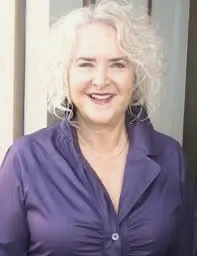
Key Facts About Paula Pacino's Life and Legacy
While detailed information about Paula Pacino remains limited by her own choice, the following verified and widely acknowledged points help define her story:
She is Al Pacino's half-sister, sharing the same father (Salvatore Pacino) but born of a different mother (Corrine Pacino). The distinction between "sister" and "half-sister" is important for accuracy when exploring the Pacino family genealogy.
She was born around 1950, making her approximately 75–76 years old as of 2026, and her upbringing in California contrasted significantly with Al's New York childhood.
She has never pursued a career in acting, film production, or any other publicly documented entertainment profession. Despite occasional mislabelings in online celebrity databases, no verified acting credits exist for Paula Pacino.
Her full sisters Roberta and Josette both touched the entertainment world to varying degrees, while Paula remained entirely removed from it suggesting this was a deliberate and personal choice rather than a lack of opportunity or connection.
Her father Salvatore, who passed away in 2005, was a community figure known for his restaurant, his occasional interest in acting (he appeared in Younger and Younger in 1993), and his deep love of arts and culture, a legacy Paula carries in her own quiet way.
No confirmed information exists about Paula's marital status, romantic relationships, or whether she has children, demonstrating her commitment to maintaining boundaries between family life and public curiosity.
She is believed to reside in either California or New York, the two states most deeply connected to the Pacino family's history and roots.
Sal Pacino's Legacy and Its Influence on His Children
No exploration of Paula Pacino's life would be complete without a deeper look at the man who fathered her Salvatore "Sal" Pacino. Born in 1922, Sal spent decades as an insurance salesman but harbored a genuine artistic spirit throughout his life. He eventually channeled that passion into his restaurant, "Pacino's," where Italian food, good conversation, and community gathered under one roof. He also pursued occasional acting work in his later years, most notably appearing in the 1993 film Younger and Younger, which gave him the opportunity to share at least a small corner of the screen world his famous son had long inhabited. Salvatore passed away in 2005, leaving behind a family dispersed across professions and lifestyles but united by blood, heritage, and the values he had instilled.
For Paula, Sal's legacy was less about art or ambition and more about integrity, the idea that how a person conducts their private life matters as much as, if not more than, their public achievements. She appears to have absorbed this lesson completely. Her life as best as can be understood from the outside is one of quiet self-sufficiency, emotional groundedness, and freedom from the need for external validation. These are traits Sal reportedly modeled throughout his life, even when his circumstances changed and his marriages evolved. His love for his children across all his relationships was, by most accounts, genuine and that foundation gave Paula and her siblings the security to define success on their own terms.
Paula Pacino and the Broader Conversation About Celebrity Families
Paula Pacino's story opens a window into a broader and often underexplored conversation about the dynamics of celebrity family culture in America. The relatives of famous people occupy a peculiar social position: they are adjacent to extraordinary visibility without necessarily wanting it, and they often spend their lives navigating the tension between the public's curiosity and their own desire for normalcy. Some family members of celebrities lean into their proximity to fame, building public profiles of their own. Others, like Paula, retreat from it entirely. Both choices are valid, but the latter is far less understood and far less celebrated.
Paula's choice to live privately does not diminish the significance of her life. If anything, it amplifies it. She demonstrates that a meaningful, well-lived existence does not require an audience. In a media environment that relentlessly rewards exposure and punishes invisibility, this is a quietly revolutionary position to take. It challenges the cultural assumption that significance must be verified by public attention, and it offers a different model of what it means to live with dignity and purpose. Her life, though undocumented by the press, is its own form of statement, a testament to the power of personal boundaries and the freedom that comes from defining one's own narrative rather than having it defined by association with someone else's fame.
Conclusion: The Quiet Dignity of Paula Pacino
Paula Pacino may never give an interview, walk a red carpet, or publish a memoir. She may never offer the world a direct window into her inner life or personal history. And that, in its own way, is the most eloquent thing about her. In a family that produced one of cinema's greatest artists, Paula chose a different kind of greatness, the kind that is measured not in awards or box office receipts but in the quality of everyday life, the depth of personal relationships, and the quiet satisfaction of knowing who you are without needing anyone else to confirm it.
Her story is ultimately one of self-determination, a woman who understood from an early age that being related to a famous person does not obligate you to seek fame yourself. She is the grounding force in the Pacino family narrative, the embodiment of the Italian-American values her father carried across generations, and a reminder that behind every celebrated name, there are people living full and private lives that are no less worthy of respect. Paula Pacino's biography may be thin in documented facts, but it is rich in meaning and that richness is entirely her own.
More Insightful content, please visit, https://www.omenr.co.uk/